
ClimaPannonia project began in March 2025 in Novi Sad (Serbia), marking the start of a regional collaboration focused on one of the most pressing questions of our time – how agriculture adapts to a changing climate.
Over the past year, this collaboration has taken shape through research, fieldwork and continuous exchange between our partners across the Pannonian region. What started as a shared vision has gradually evolved into a structured process of testing ideas, gathering evidence and building practical solutions.
From the very beginning, activities have ranged from desk research and scientific publications to field-based experimentation through Deep Demonstration sites, where approaches are tested under actual farming conditions. At the same time, workshops and stakeholder engagement have played a key role in connecting farmers, researchers, advisors and policymakers, ensuring that knowledge flows in both directions.
Throughout the year, ClimaPannonia has also built a strong presence beyond the field. Active communication across digital platforms created a space for sharing insights and progress with a wider audience, while participation in relevant events further positioned the project within broader professional and scientific discussions.
The blog series has been one of the central threads of this journey. Across ten editions, we explored topics ranging from climate patterns in the Pannonian basin and soil health to farming practices, business models and risk assessment. Each blog reflected a different layer of the project, gradually connecting individual insights into a broader understanding of agricultural resilience.
At the same time, the project contributed to scientific research, with results published in leading journals, while also extending its outreach through print and television media, bringing project insights closer to a wider public and strengthening its visibility beyond the scientific community.
This first year has also marked the beginning of ClimaPannonia’s replication dimension – extending insights beyond individual locations and exploring how tested approaches can be adapted across the wider Pannonian Biogeographical Area.
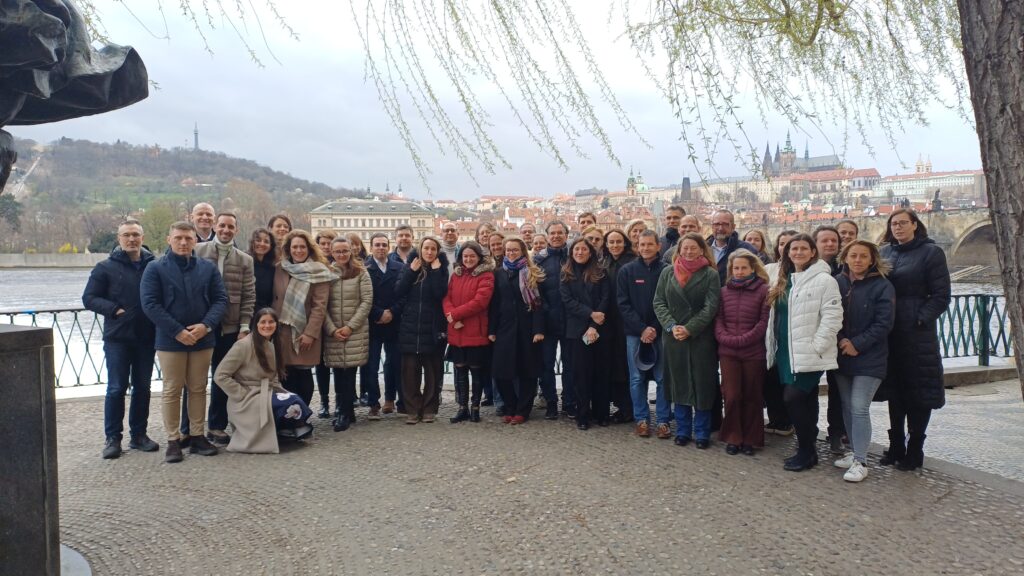
In March, in Prague (Czech Republic), partners gathered not only to reflect on the work behind us, but also to define upcoming priorities. This moment offers an opportunity to connect results from different countries, exchange experiences from the field and define the next steps toward scaling solutions and stronger cross-border collaboration.
One year in, ClimaPannonia is no longer just a project framework. It is a growing network of people, practices and ideas working toward a shared goal – building agriculture that can respond, adapt and endure.
Looking ahead, the focus remains clear: translating knowledge and resilience into action.