Why resilient agriculture depends on investing in infrastructure, technology, and skills across the entire value chain
Climate risk is a value chain risk
Climate change is already reshaping agricultural systems across Europe and particularly in the Pannonian region. More frequent droughts, heatwaves and floods are not only affecting crop yields; they are disrupting the entire journey from farm to market. While adaptation efforts often focus on individual farms, climate risks propagate along value chains – from production and storage to processing, transport and market access. Up to 14% of global food is lost between harvest and retail, often due to weaknesses in storage and transport systems, losses that increase significantly during extreme weather events (FAO, 2023). Flooded transport routes delay deliveries, heatwaves damage stored produce, and limited processing capacity can turn a climate shock into a full supply chain disruption.
As the European Environment Agency notes, climate impacts on food supply chains are becoming a systemic risk for Europe’s agricultural sector (EEA, 2023). Research on global value chains also shows that production systems are deeply interconnected. Understanding where value is created and absorbed across supply chains helps identify where vulnerabilities lie and where investment can have the greatest impact (WB, 2019). Climate resilience must therefore be addressed not only at farm level but across the entire value chain.
Infrastructure and capabilities: a core pillar of resilience
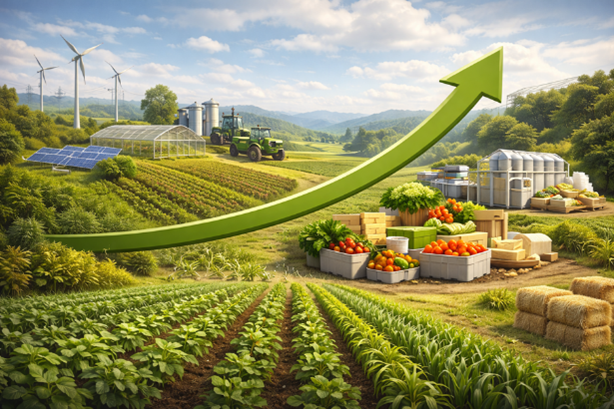
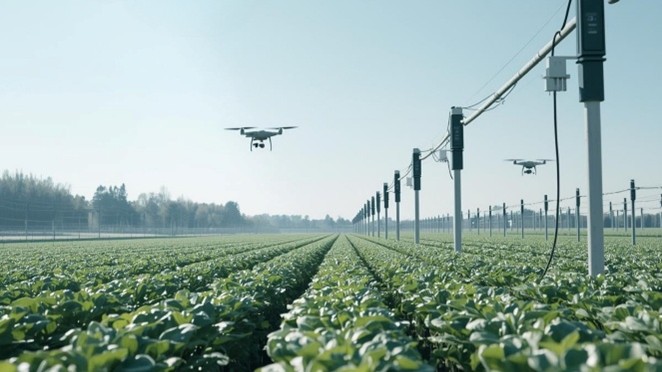
Resilient agriculture depends on resilient infrastructure. Water management systems help mitigate drought, while modern storage facilities protect crops from extreme temperatures. Reliable transport networks ensure that produce reaches markets even when floods or storms disrupt normal routes. Digital monitoring and forecasting tools allow stakeholders to anticipate risks and adapt operations. However, infrastructure alone is not enough. Participation in value chains – and the ability to withstand shocks – also depends on capabilities such as logistics performance, institutional coordination, access to technology, and skills development (WB, 2016). These capabilities determine whether agricultural systems can adapt to changing climatic conditions or remain vulnerable.
The European Commission’s Farm to Fork Strategy and EU Adaptation Strategy both stress the importance of investing in sustainable and resilient food systems. Yet many regions still face gaps in storage, processing, and transport infrastructure. In climate-sensitive areas such as the Pannonian region, strengthening these capabilities is essential not only for adaptation but also for maintaining productivity and market stability. Strategic investment in cold storage, irrigation, resilient transport corridors, and digital early-warning systems can significantly reduce losses and improve efficiency. At the same time, training programmes and knowledge-sharing initiatives can help farmers and processors adopt climate-smart practices and technologies.
Financing the full value chain
One of the main barriers to building climate-resilient agriculture is fragmented financing. Investments often target individual farms or isolated projects, leaving critical bottlenecks elsewhere in the chain. Yet climate risks affect every link, and resilience measures must be coordinated accordingly. Value chain financing offers a more integrated approach. By aligning investments across production, storage, processing, and distribution, decision-makers and investors can strengthen entire systems rather than isolated nodes. Recent work on value-added trade highlights the importance of understanding how value flows through supply chains in order to target investments more effectively (WB, 2019). Blended finance models, public-private partnerships, and regional investment frameworks can help mobilise resources for infrastructure and innovation. At the same time, financial instruments should support skills development and technological adoption, ensuring that stakeholders across the value chain can adapt to climate challenges. For regions such as Pannonia, where agricultural systems are highly interconnected across borders, coordinated financing is particularly important. Investments in logistics, processing capacity, and climate-smart technologies can enhance both resilience and competitiveness.
From adaptation to transformation
Building resilience is not only about absorbing shocks – it is about transforming agricultural systems to operate under new climatic realities. This requires long-term investment in infrastructure, capabilities, and institutional coordination. The OECD and World Bank increasingly emphasise that climate adaptation must move toward systemic approaches that strengthen entire value chains. Skills development, innovation, and collaboration between stakeholders are key to this transformation. Farmers, processors, logistics operators, and policymakers must work together to identify vulnerabilities and implement coordinated solutions. When investments are aligned across infrastructure, technology, finance, and skills, resilience becomes cumulative. Productivity improves, vulnerability declines, and agricultural systems become better equipped to withstand future shocks.
Conclusion: toward coordinated resilience
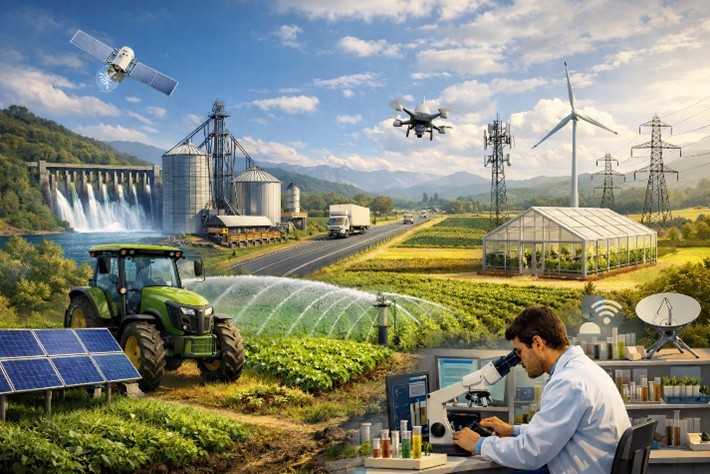
Climate-resilient agriculture cannot be achieved through isolated interventions. It requires a holistic approach that connects farm-level adaptation with infrastructure, finance, technology, and skills across the entire value chain. By investing in the full value chain and the capabilities that sustain it, agricultural systems can move from vulnerability to long-term resilience in a changing climate.
References:
European Commission (2020). A Farm to Fork Strategy for a fair, healthy and environmentally-friendly food system. Brussels.
European Commission (2021). EU Strategy on Adaptation to Climate Change. Brussels.
European Environment Agency (2023). Climate change impacts and adaptation in Europe.
FAO (2023). The State of Food and Agriculture 2023: Revealing the true cost of food to transform agrifood systems. Rome.
OECD (2022). Building Climate-Resilient Food Systems. Paris.
World Bank (2019). Measuring What Matters in Global Value Chains and Value-Added Trade. Washington, DC.
World Bank (2016). Capabilities and Participation in Global Value Chains. Washington, DC.
Author: EAD Society